Surimono of miscellaneous subjects
|
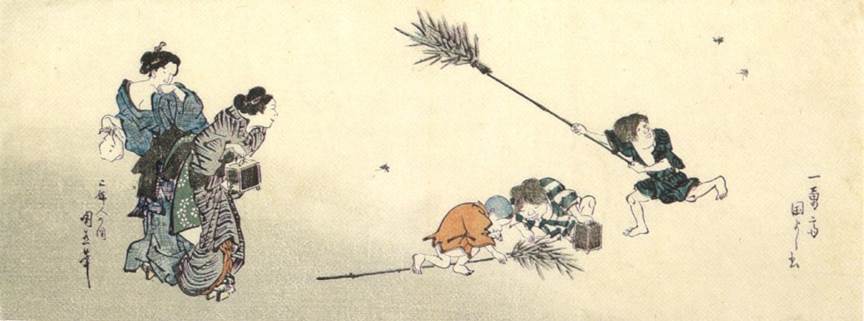
Description: Two ladies
watching boys catching fireflies with bamboo sticks. The women were draw by Utagawa Kuninao and the children were drawn by Kuniyoshi. Size: Nagaban
(approximately 8 by 20 inches or 20 by 50 centimeters) Date: c. 1835 Schaap: 1.a.1 |
|
|
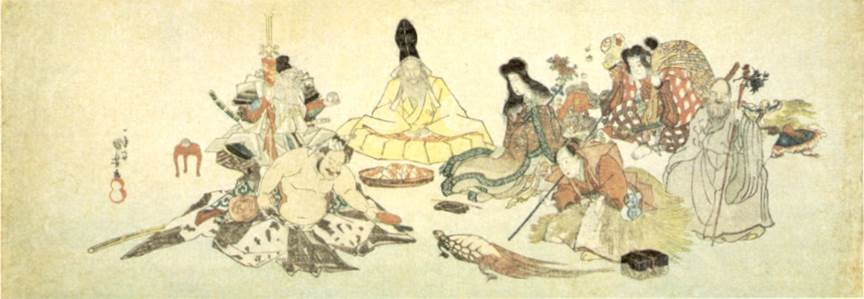
Description: A minogame (thousand-year-old tortoise)
appearing to the seven gods of good luck all dressed as figures from Japanese
history and legend Size: Nagaban (approximately
8 by 20 inches or 20 by 50 centimeters) Date: c. 1836 Schaap: 1.a.2 |
|
|
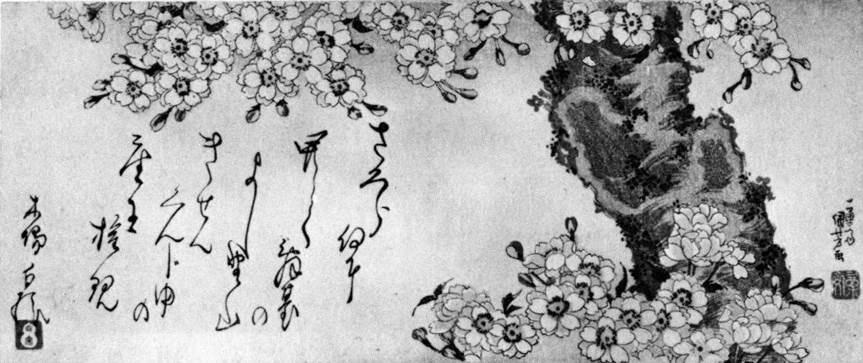
Description: Detail of the
trunk of a large flowering cherry tree Size: Date: c. 1835 Schaap: 1.a.3 |
|
|
No image
available Description: A plum tree Size: Date: c. 1835 Schaap: 1.a.4 |
|
|
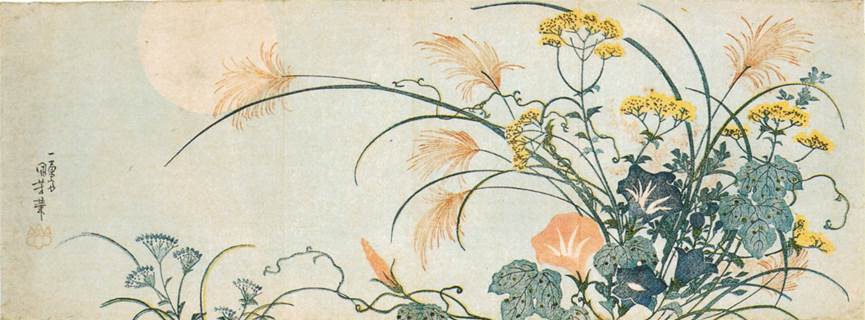
Description: Autumn
grasses and a full moon Size: Nagaban
(approximately 8 by 20 inches or 20 by 50 centimeters) Date: c. 1831 Schaap: 1.a.5 |
|
|
No image
available Description: Autumn
grasses and a full moon Size: Nagaban (approximately
8 by 20 inches or 20 by 50 centimeters) Date: c. 1831 Schaap: 1.a.6 NOTE: This surimono is unsigned and different
from the above print. |
|
|
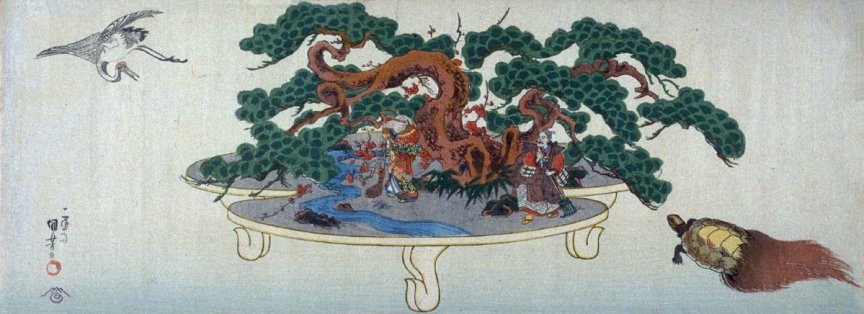
Description: A three
footed dish (shimadai, 島台) with a
miniature representation of the Takasago pine with the old couple Joo and
Uba, the thousand-year tortoise, and a flying crane Size: Nagaban
(approximately 8 by 20 inches or 20 by 50 centimeters) Date: 1830-1840 Schaap: 1.a.8 NOTE: The pine, tortoise and crane are symbols of longevity, fortune and
lifelong partnership. They were
displayed at weddings and at significantly numbered wedding
anniversaries. This surimono
was probably made for a wedding or anniversary. I am grateful to Robert Pryor for this
information. |
|
|
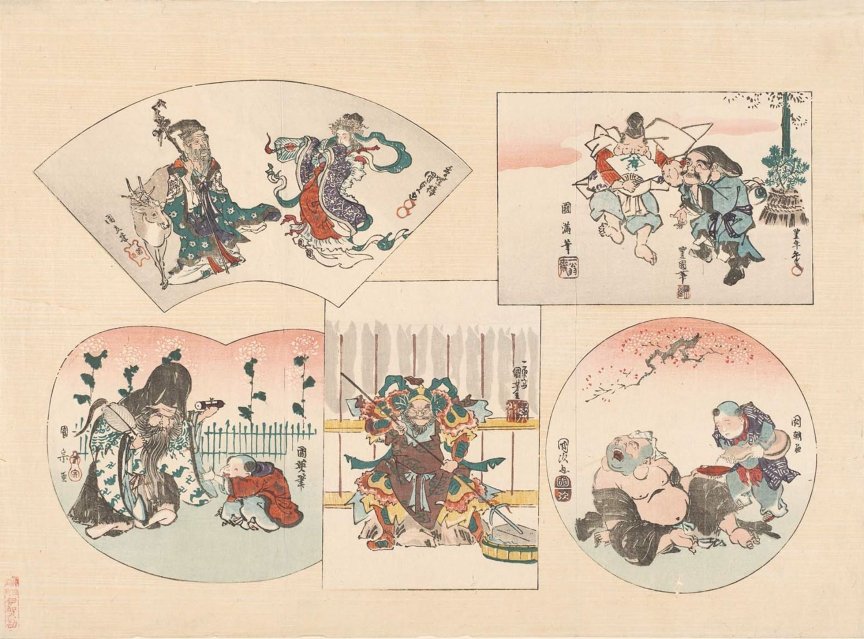
Description: The seven
gods of good luck (Shichifukujin, 七福神) imitating the
five annual festivals. Size: Horizontal
double ôban; 38.1 x 51.6 cm (15 x 20 5/16 in.) Date: 1832-1833 Publisher: Iga-ya Kan'emon Schaap: 1.b.5 NOTE: This surimono bears the signatures of 10
different artists. Only Bishamonten, in the bottom center, is signed by
Kuniyoshi. |
|
|
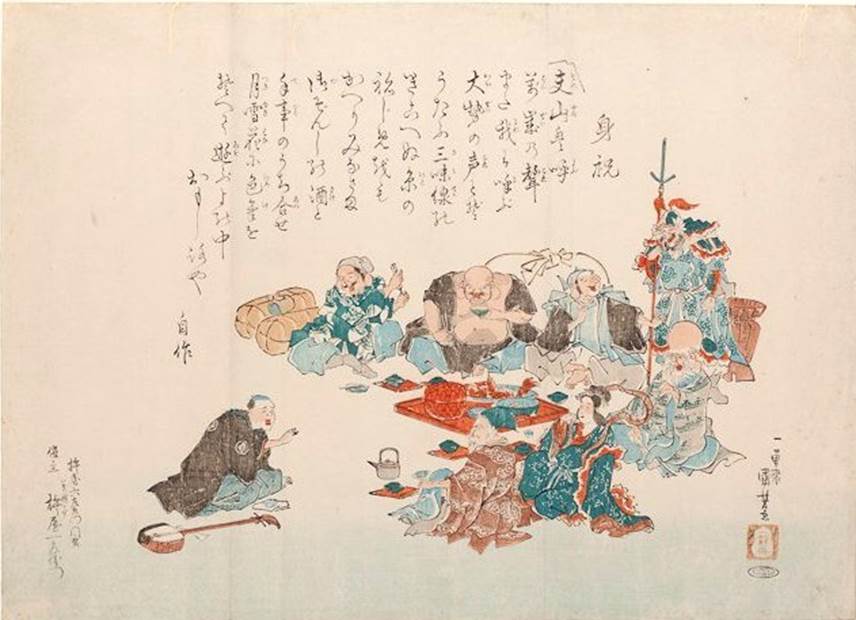
Description: The seven
gods of good luck being entertained by a chanter Size: 40.6 by 55.8
centimeters Date: Schaap: 1.b.6 |
|
|
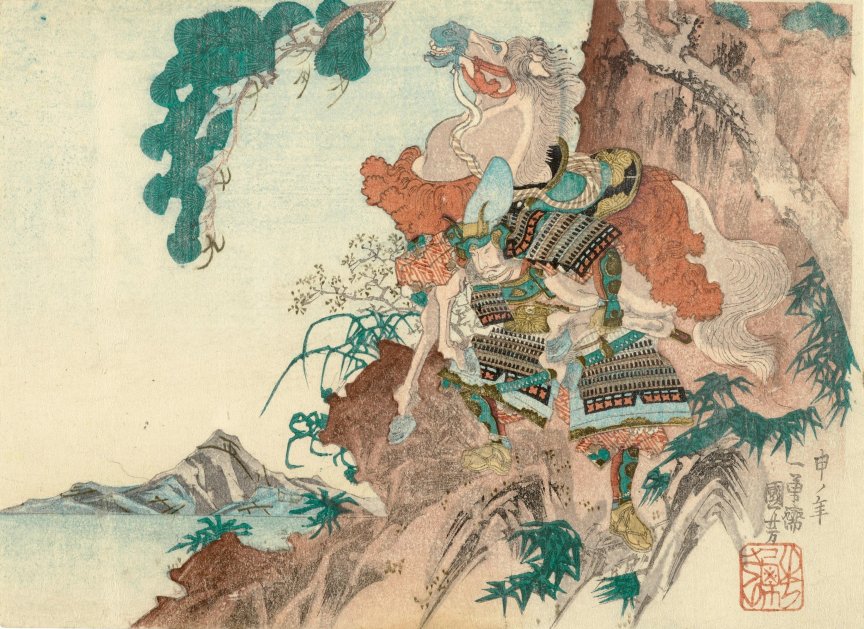
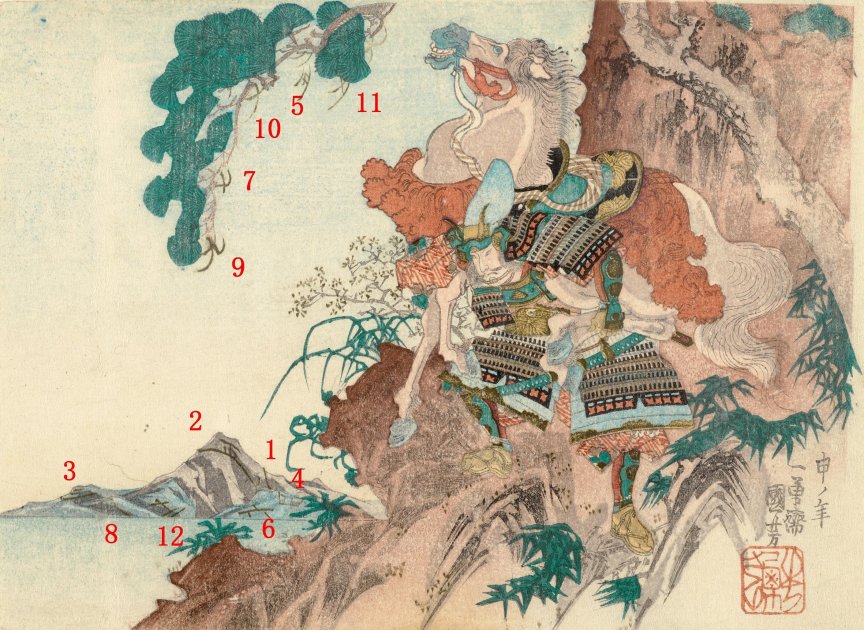
Title: Year of the Monkey (Saru no toshi, 申ノ年) next to Kuniyoshi’s signature Description: The warrior
Hatakeyama no Shigetada (1164-1205) carrying his
horse down a steep cliff Size: 5.25 x 7.25
inches (13.3 x 18.4 cm) Date: 1848 Schaap: 1.c.4 NOTE: In addition to being
a surimono, this print is also an e-goyomi (絵暦), meaning that it has concealed numbers indicating the long and short
months of the year:
|
|
|
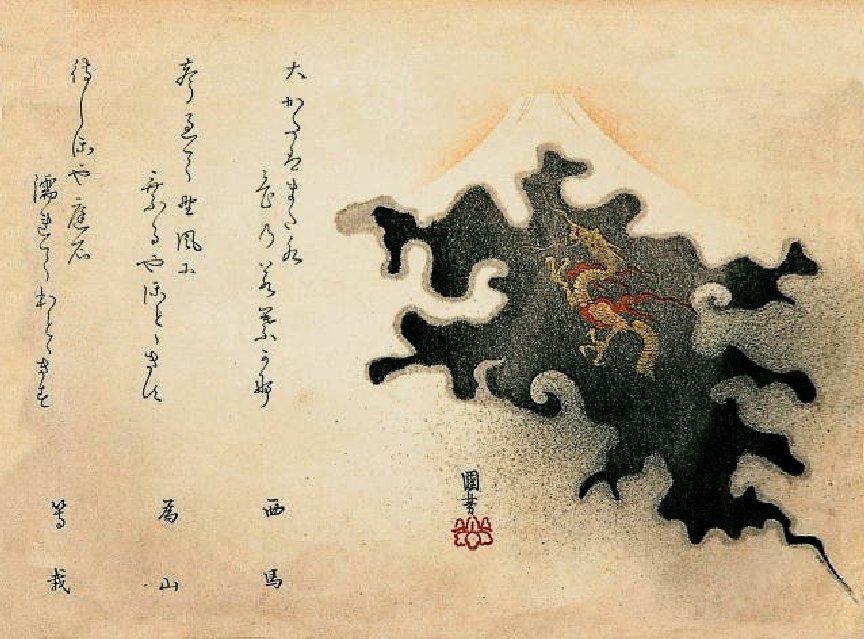
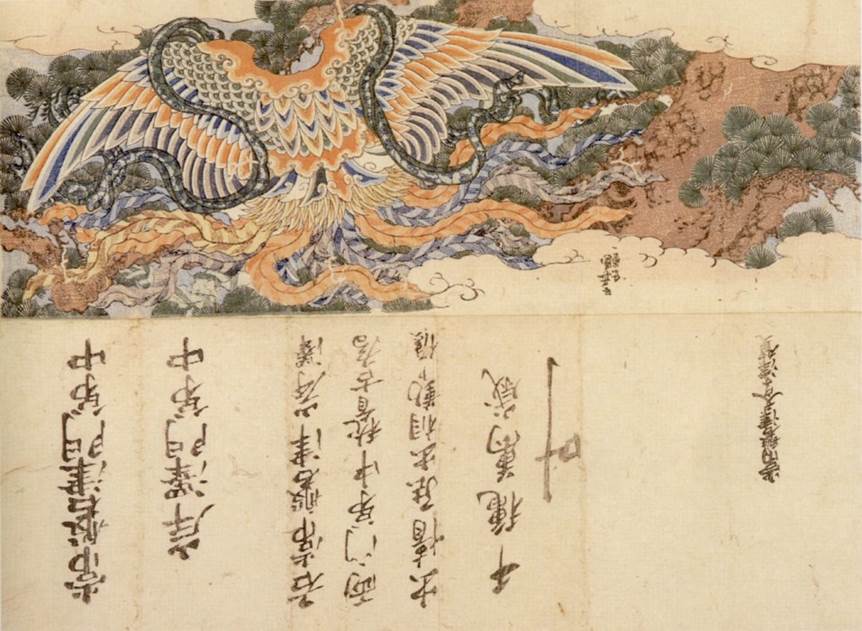
Description: A dragon in a
dark cloud rising to the top of Size: 18.4 by 24.5
centimeters Date: probably 1844
Schaap: 1.c.5 I am grateful to Robert Pryor for this image. |
|
|
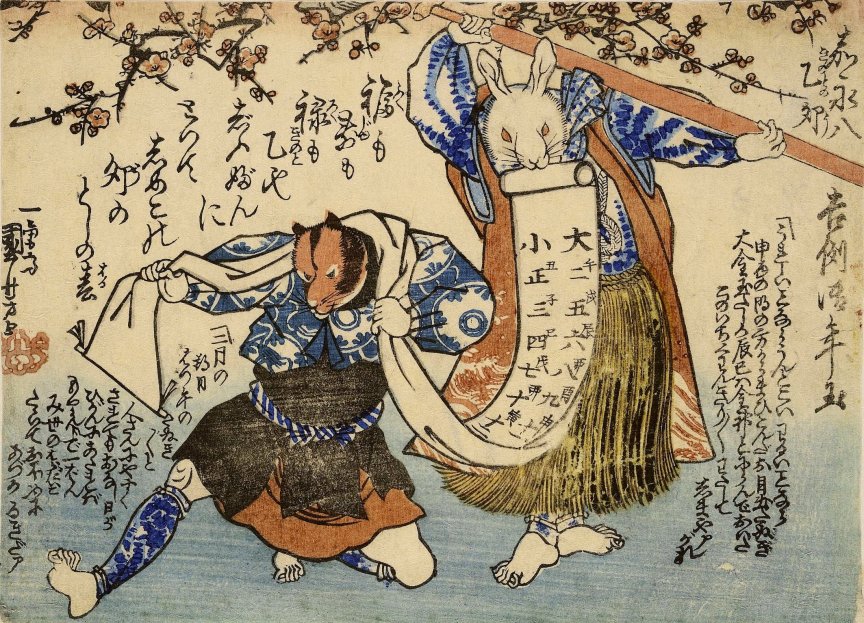
Description: A hare and a
badger standing by a plum tree in a scene from a kabuki play Size: 12.0 by 16.0
centimeters Date: 1855 Schaap: 1.c.6 NOTE: This print is a calendar (e-goyomi). The animals are holding a banner listing
the long (大) and short (小) months of the year. I am grateful to Robert Pryor for this
image. |
|
|
|
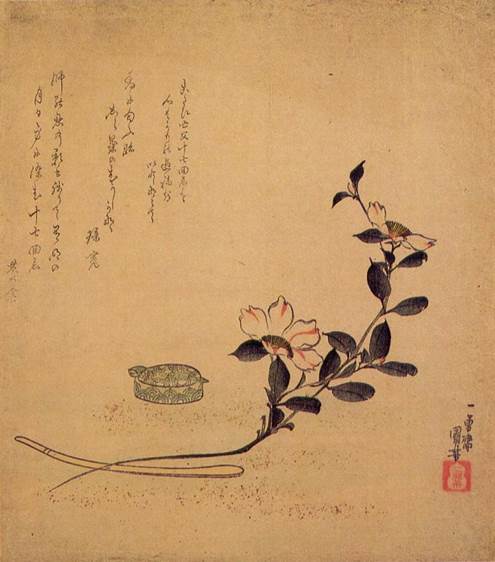
Description: A spray of
camellia, a bamboo tea scoop (chashaku) and a small turtle-shape box with a lid Size: 45 by 37
centimeters Date: Schaap: 1.c.7 NOTE: The unusual
size suggests that this is a fragment of a larger surimono. |
|
|
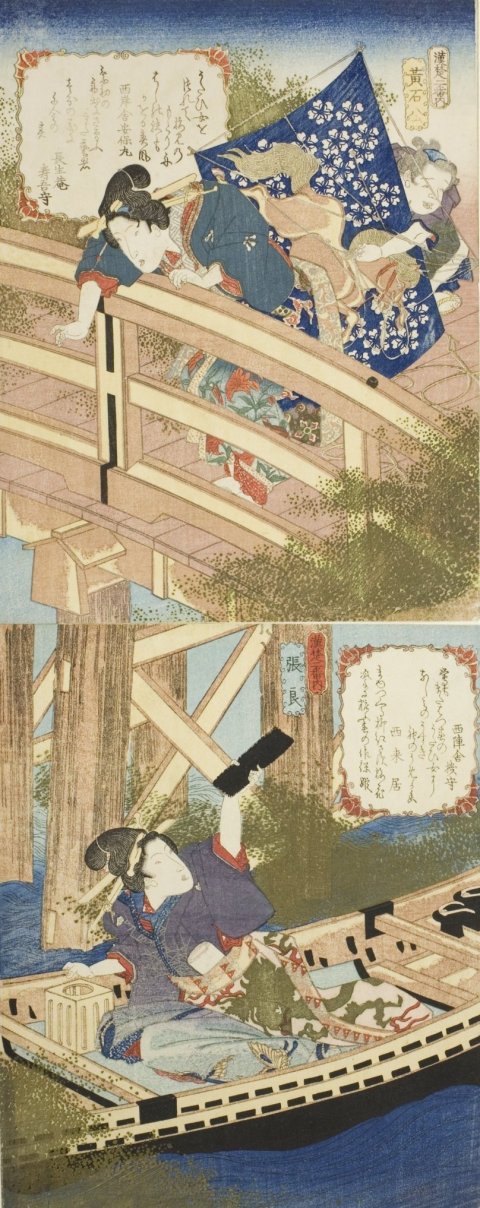
Title: A series of
two on the stories of the Han and Chû (Kansô niban no uchi) Description: Huang Shigong (Kosekiho) and Zhang
Liang (Choryo) Size: 41.3 × 16.5
cm (16 ¼ × 6 ½ inches) Date: c. 1834 NOTE: This surimono
is unsigned, and therefore the attribution must be considered tentative. |
|
No image
available |
Description: Portrait of
the sumô
wrestler Hirado Hiiryokubi Size: Date: Schaap: 2.8 |
|
|
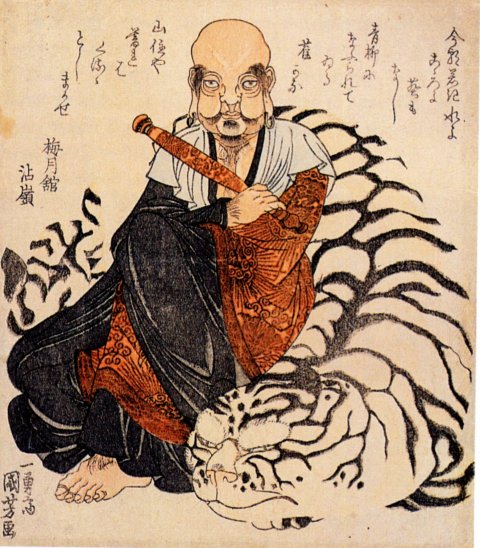
Description: Hattara Sonji, a disciple of Buddha, with his white tiger
Size: Date: 1830 Schaap: 2.9 |
|
|
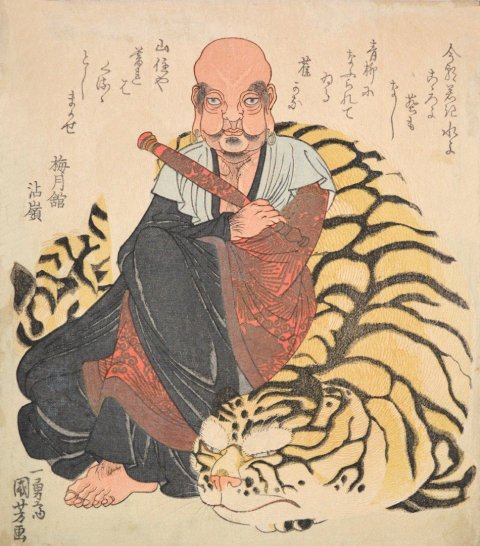
Another state of the above design in
which the tiger is yellow-orange |
|
|
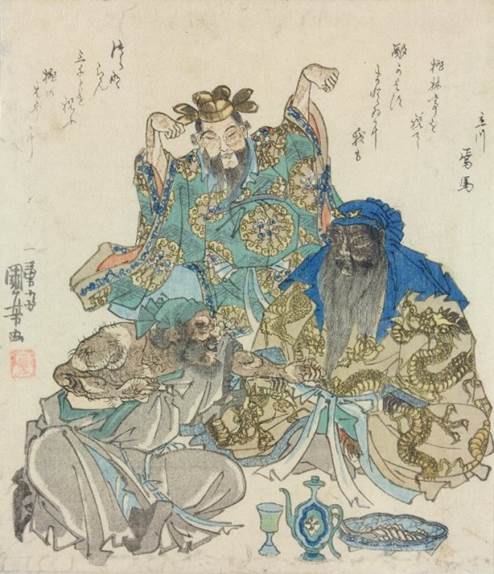
Description: Guan Yu, Liu
Bei, and Zhang Fei (the three heroes of the Chinese kingdom of Shu) playing a
game of ken Size: Date: c. 1840 Schaap: 2.10 |
|
|
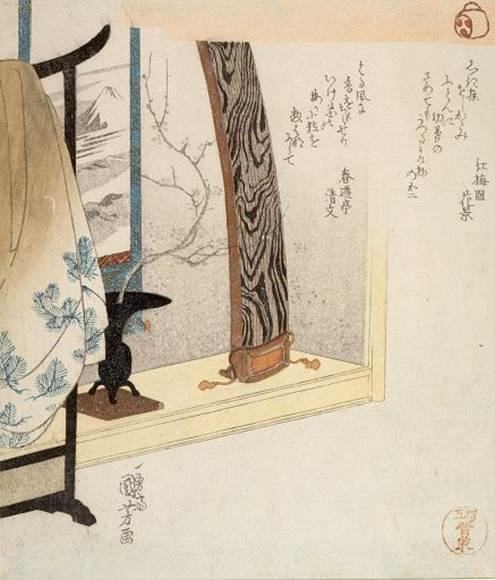
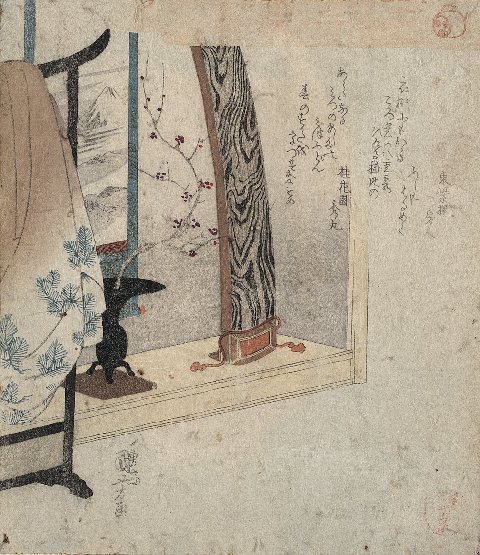
Description: Still life of
a koto, a branch of plum in a
bronze vase, a kimono and a scroll
painting of Size: Shikishiban
(about 8 by 7 inches or 21 by 18 centimeters) Date: Schaap: 4.2 |
|
|
I am grateful to Robert Pryor for this
alternate state with different poems. |
|
|
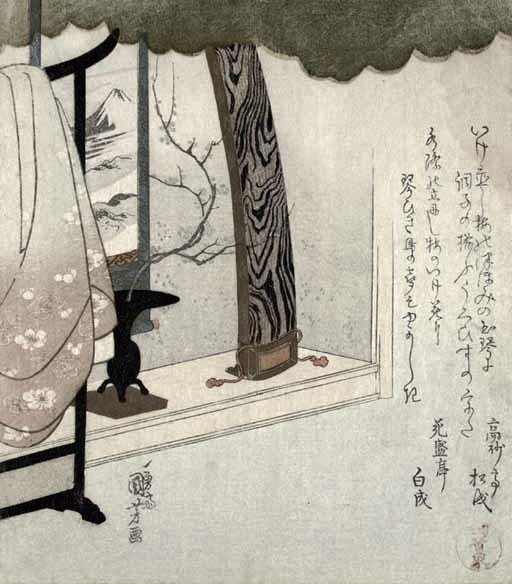
Description: Similar to
above with different pattern on the kimono,
different poems, and lacking emblem of the Taikogawa poetry group in
right-upper corner Size: Shikishiban
(about 8 by 7 inches or 21 by 18 centimeters) Date: Schaap: 4.2b |
|
|
Description: Three open
fans alluding to three noh
plays Size: Shikishiban
(about 8 by 7 inches or 21 by 18 centimeters) Date: c. 1840 Schaap: 4.3 NOTE: The three fans are decorated with items used in
the sanbasô dance in both no and kabuki
plays. I am grateful to Michel Ouellet
for locating this image. |
|
No image available |
Title: Harimaze jôruri kagami oishi Description: Size: Date: c. 1854 Schaap: 4.4 |
|
|
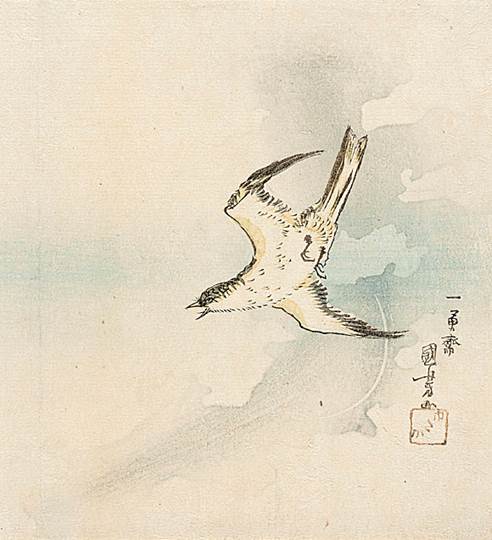
Description: Descending
cuckoo Size: 18.6 x 17cm Date: c. 1850 Schaap: Not listed |
|
|
Description: Mice at play Size: Shikishiban
(about 8 by 7 inches or 21 by 18 Date:
Schaap: Not listed I am grateful to Robert Pryor for this
image. |
|
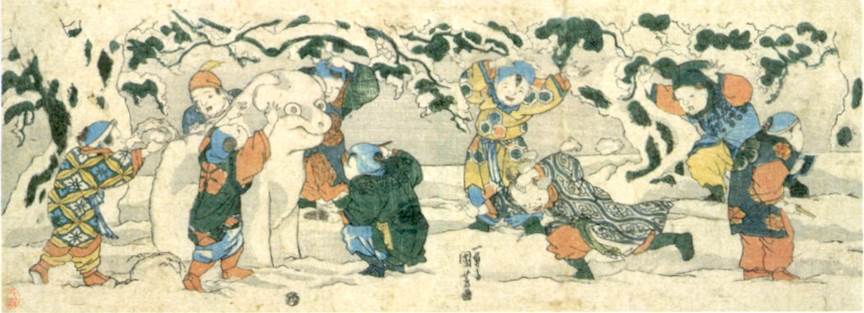
Description: Children
playing in the snow Size: Nagaban
(approximately 8 by 20 inches or 20 by 50 centimeters) Date: 1826 Schaap: Not listed |
|
|
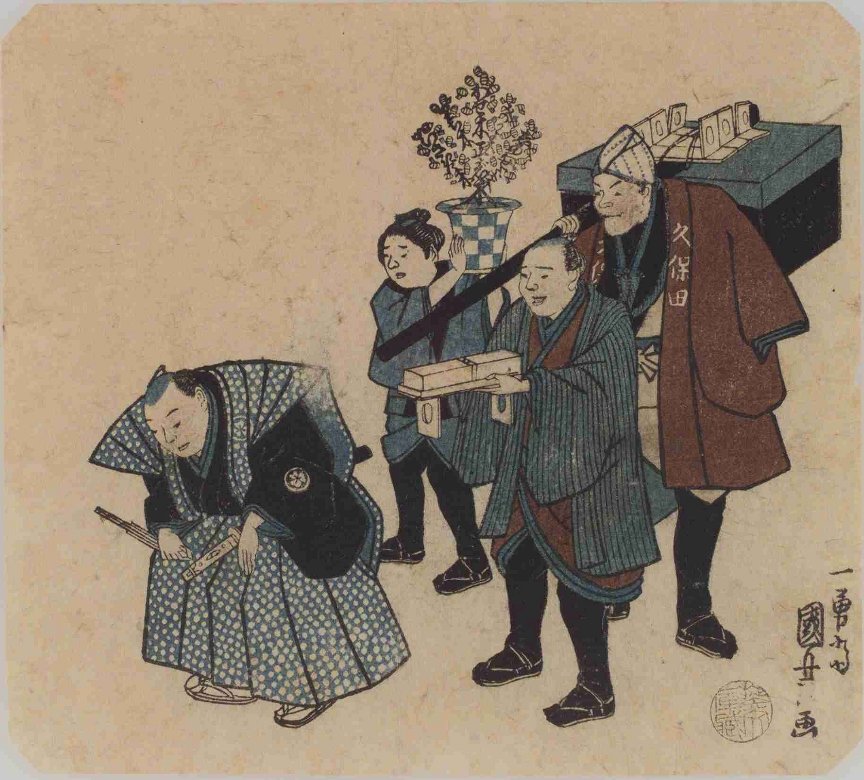
Title: Size: Date: c. 1841-1842 Schaap: Not listed Note: This is an
advertising print (hikifuda)
and not a true surimono. The text on the porter carrying the gift
box reads Kubota (久保田), which is
present day Akita Prefecture. I am
grateful to Guy Pepermans for this image and
information. |
|
|
Description: Size: Date: Schaap: Not listed |
|
|
Description: A haisen (盃洗, vessel used
to rinse sake cups) with a New Year’s shrine pilgrimage list Size: Date: c. 1834 Schaap: Not listed NOTE: The haisen is
decorated with the Sumida embankment viewed from the roof of the Mimeguri Shrine (visible at the bottom). In the floating sake bowl with flowers Sumidagawa (福禄川, it was top to
bottom script on its side). The
perched cup is illustrated with the Seven Lucky Gods. The list reads: Mukojima Shichifukujin (向𫝵七福神) [Pilgrimage of] the Seven Lucky Gods in Mukojima Mimeguri Inner Shrine (三囲り社内) Ebisu (恵美須) Chomeiji [Shrine] (長命寺) Benzaiten (弁財天) Kofukuji [Shrine] (弘福寺) Hotei (布袋) Daikokuten (大黒天) uncertain Fukurokuju (福禄寿) uncertain Shirohige Daimyojin (白鬚大明神) Juroujin (寿老人) Sumida Tamonji [Shrine] (隅田?多聞寺) Bishamonten (毘沙門天) I am grateful to Robert Pryor for this image and information. |
|
|
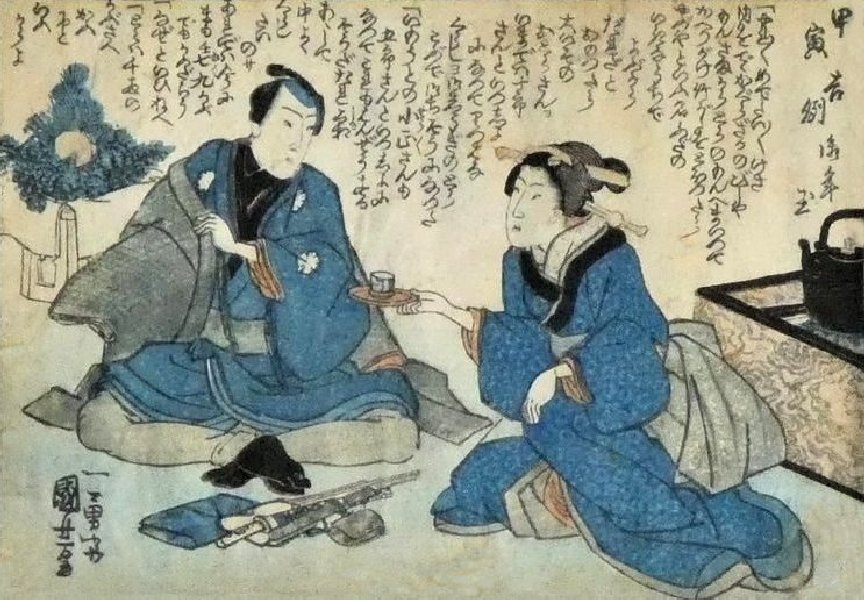
Description: Geisha
offering a drink to a samurai Size: 11.5×16.5 cm Date: 1854 Schaap: Not listed |
|
|
Description: The six
Immortal Poets playing parlor strength games Size: Date: c. 1848 Publisher: Ôta-ya Sakichi Schaap: Not listed I am grateful to Robert Pryor for this image. |
|
|
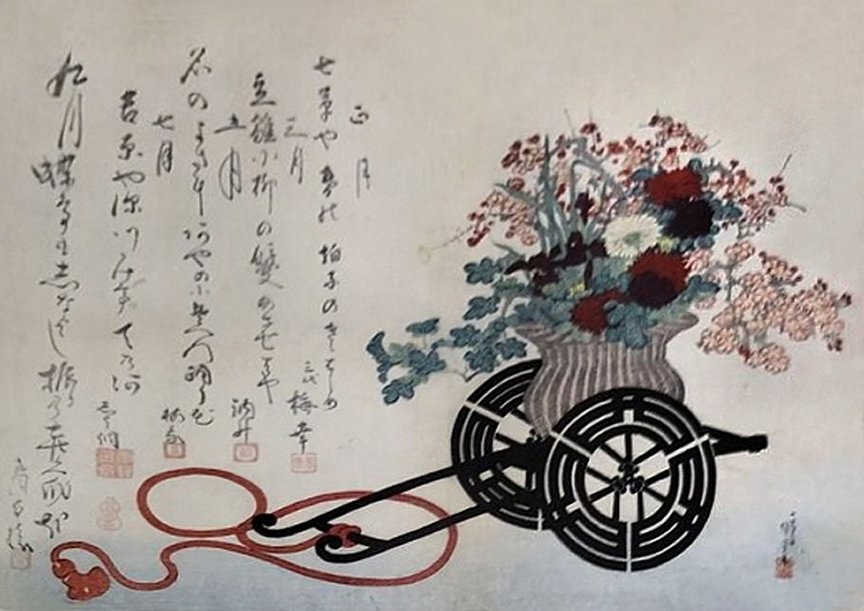
Title: Flower Cart (Hanaguruma, 花車) Description: Size: Date: Publisher: Schaap: Not listed I am grateful to Robert Pryor for this image. |
|




|
“Schaap”
refers to listing in Heroes and Ghosts:
Japanese Prints by Kuniyoshi by Robert Schaap (Hotei Publishing, Leiden,
1998). CLICK HERE TO RETURN TO MAIN
PAGE
|